Does Solar Increase Your Home Insurance in California? What Insurers Don't Tell You (2026)
If you're planning solar panels for your California home, there's a question most installers won't bring up first: does solar increase your home insurance? The short answer is usually yes — but not for the reason most homeowners assume, and the amount is smaller than people expect.

Does Solar Increase Your Home Insurance in California?
In most cases, adding solar panels to your California home does raise your homeowners insurance — but only slightly. Insurers see solar panels as an added structure attached to your roof, similar to a sunroom or a permanent deck. That added value means added replacement cost, which is what actually moves your premium, not the panels' "green" status.
Most California homeowners see their premium increase somewhere between $50 and $200 per year after adding solar panels home insurance California coverage, depending on system size and insurer.
How Solar Panels Affect Your Insurance Premium in California (2026)
Three things determine how much your solar panels home insurance California premium actually changes:
System value added to your dwelling coverage. Your insurer needs to know the installed cost of your system so your dwelling coverage limit covers a full rebuild, panels included.
Roof-mounted vs. ground-mounted systems. Roof-mounted panels are usually folded into your existing dwelling policy. Ground-mounted systems (common on larger San Bernardino-area lots) are often treated as a separate structure, which can affect the math differently.
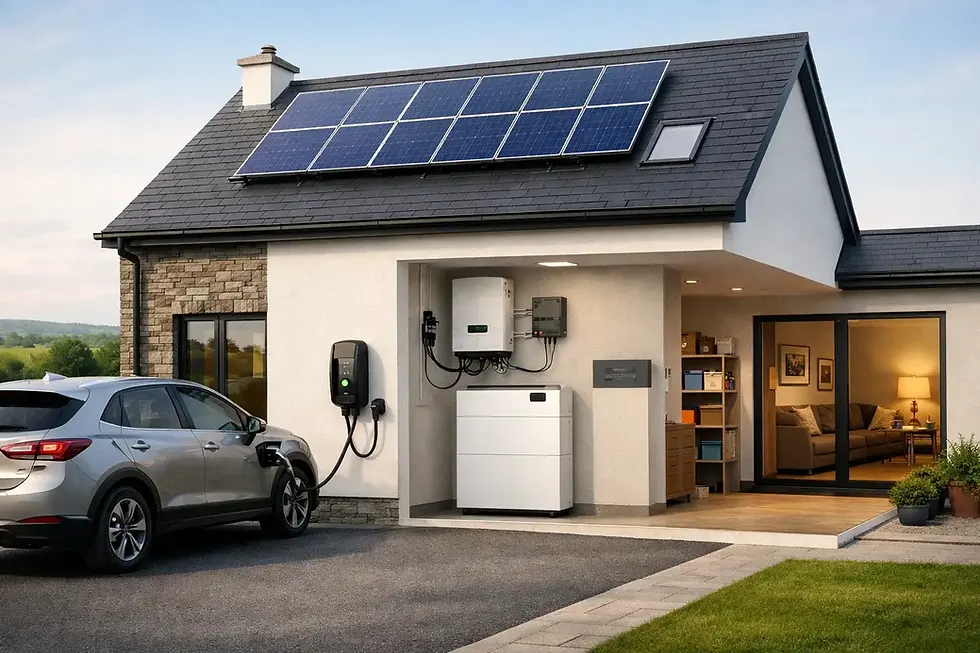
Battery storage. If you added a Tesla Powerwall or similar battery alongside your solar, that's usually a separate line item insurers ask about, since batteries carry their own fire and liability considerations.

What Insurers Actually Look At When You Add Solar
Insurers aren't grading your solar panels home insurance California policy on how much you're saving on your electric bill. They're looking at:
Total replacement cost of your home with the system attached
Installer and equipment documentation (permit, interconnection agreement, product warranties)
Roof age and condition before installation — an older roof under new panels can actually raise scrutiny
Whether the system is owned or leased, since a leased system may need to be insured by the leasing company instead of you
This last point trips up a lot of homeowners who financed through a solar lease or PPA. If you don't own the equipment, your homeowners policy may not need to cover it at all — but you should still confirm this in writing with your insurer, not just assume it.
The Insurance Add-On Most California Homeowners Skip
Here's the part most installers never mention: most standard homeowners policies already include some coverage for permanently attached solar panels, since they're treated as part of the dwelling.
The mistake homeowners make is not increasing their coverage limit to reflect the system's actual value — meaning if a fire or hailstorm damages the whole roof, the payout might fall short of a full solar-plus-roof rebuild.

Two coverage points worth asking your insurer about directly:
Dwelling coverage limit increase to reflect the added value of the solar system
Equipment breakdown coverage, which can help with inverter or battery failures that aren't caused by a covered peril like fire or storm damage
Real Cost Range: Solar Insurance Add-On in California
System Type | Typical Annual Premium Increase |
Roof-mounted panels only (5–8kW) | $50 – $120 |
Roof-mounted panels + battery | $100 – $200 |
Ground-mounted system | $150 – $300 |
These numbers are general ranges, not quotes — always confirm with your own insurer. Rates vary by ZIP code, carrier, and system size.
Common Insurance Mistakes After Solar Installation
Not notifying the insurer at all. Some homeowners install solar and simply never update their policy, which can create claim issues later.
Assuming solar automatically lowers premiums. It doesn't — solar affects your electric bill, not your risk profile.
Skipping the paperwork trail. Keep your permit, interconnection agreement, and equipment invoices; insurers ask for these during claims far more often than homeowners expect.
Confusing this with solar scams. If someone tells you solar panels "automatically qualify you for an insurance discount," treat that the same way you'd treat other Solar Scams in California (2026): How to Spot Red Flags, Avoid Fake Offers, and Protect Your Home — verify directly with your insurance carrier, not the salesperson.

How to Make Sure Your Solar System Is Properly Covered
Call your homeowners insurance carrier before or right after installation
Provide your installer's documentation and the system's installed cost
Ask specifically about dwelling coverage limits and equipment breakdown coverage
If you added a battery, ask if it needs to be listed separately
Re-confirm coverage any time you expand your system (see our guide on Can You Add Solar Panels to an Existing 3kW System in California? (2026 Costs & Upgrade Guide)

If you're still deciding whether solar makes financial sense once you factor in costs like this, it's worth reading alongside our breakdown on Is Solar Still Worth It in California in 2026 Without the Tax Credit? NEM 3.0 Explained whether solar is still worth it in California without the federal tax credit and our full 7 Hidden Solar Installation Costs in California (2026): What Your Quote Isn't Telling You hidden solar installation costs guide — insurance is one more line item that belongs in your real payback math, alongside what we cover in our Solar Payback Period California 2026: Step-by-Step Guide to Costs, Savings, and ROI solar payback period guide.
And if you're weighing NEM 3.0 bill savings against these added costs, our NEM 3.0 California Explained (2026): Solar Costs, Battery Savings & Is It Still Worth It? NEM 3.0 explainer walks through the full savings picture.